
Why do some people make me want to entrust them with a project after just a few exchanges in a meeting?
It started with hands-on experience.
When I lead first meetings for different projects, I sometimes get a sense of how someone plans within just a few exchanges, regardless of their years of experience. One person hears a request and immediately brings out solutions and references. Another does not answer right away, but asks, 'What needs to change as a result of this work?', 'Whose choices are we trying to change, and which ones?', or 'Which conditions have already been decided?' At first, the second person may seem slower. By the end of the conversation, however, it is much clearer what needs to be done and what does not.
That difference did not come from verbal skill. It showed up less in fluent expressions or technical terminology than in how someone separated purpose, facts, interpretations, constraints, and expectations in what the other person said. Changing a single question changed the focus of the meeting. A conversation that began with 'What should we make?' moved to 'Why is this choice necessary now?' Discussion of deliverables became a discussion of the problem to solve and the criteria for making decisions.
Experience is a valuable asset. People who have been through a variety of situations can recognize more patterns and risks. But the length of a career does not automatically guarantee the ability to structure that experience. Some people have worked for years yet simply carry out requests as given; others, with relatively short careers, quickly read the context and identify the choices that matter. That is why I first sense planning ability not in the years listed on a resume, but in the questions and summaries someone uses in conversation.
The difference becomes especially clear with ambiguous requests. When someone says, 'Please make it feel more current,' a person who asks, 'Where does the brand currently feel dated: its visuals, its language, or the user experience?' rather than immediately hunting for references is translating taste into a problem. When someone says, 'We need to make more content,' a person who asks, 'Where are things getting stuck: attracting visitors, understanding, trust, or conversion?' before increasing posting frequency is looking for a bottleneck, not more activity.
The purpose of a good planning conversation is not to ask lots of questions. It is to reduce unnecessary questions while securing the context needed for decisions, and to leave everyone with the same understanding of the problem and the next action. People who plan well do not make a conversation more complicated. They leave behind language that makes choices possible within a complicated situation.
Key perspective
Richard Rumelt describes the core of good strategy as a diagnosis, a guiding policy, and coherent action. That structure applies directly to a planner's conversations. Before discussing solutions, good planners diagnose the problem at hand, choose what to prioritize, and ensure that choice leads to a next action. Stating an ambitious goal is different from building an actionable strategy.
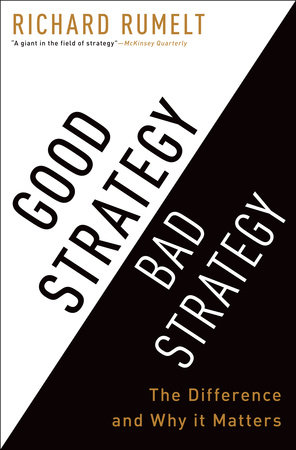
Diagnosis identifies the problem to address now; guiding policy determines what to prioritize; coherent action describes what to do next.
- Diagnosis
- Guiding policy
- Coherent action
Barbara Minto's Pyramid Principle and SCQ structure point in the same direction. They establish a shared situation, explain what has changed to create a complication, and then clarify the question that needs answering. A planner's words are easy to follow not because they contain less information, but because that information is organized around a single central question.
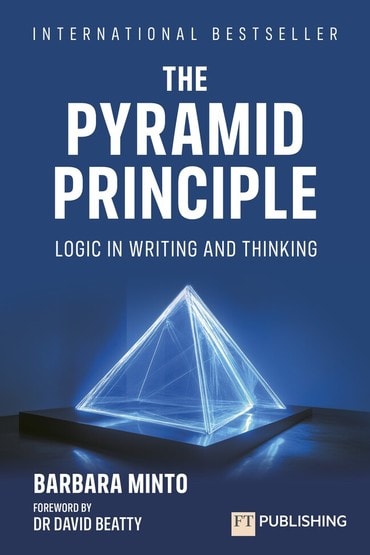
Establish the situation, explain what changed to create the complication, then identify the central question that needs an answer.
- Situation
- Change and complication
- Central question
Amazon's Working Backwards method defines the customer's future experience before describing the product. Teams write a press release and FAQ, asking who the customer is, which problem matters, and why existing approaches are not enough. They build a narrative that can answer those questions before focusing on a polished presentation because it exposes gaps in their thinking.
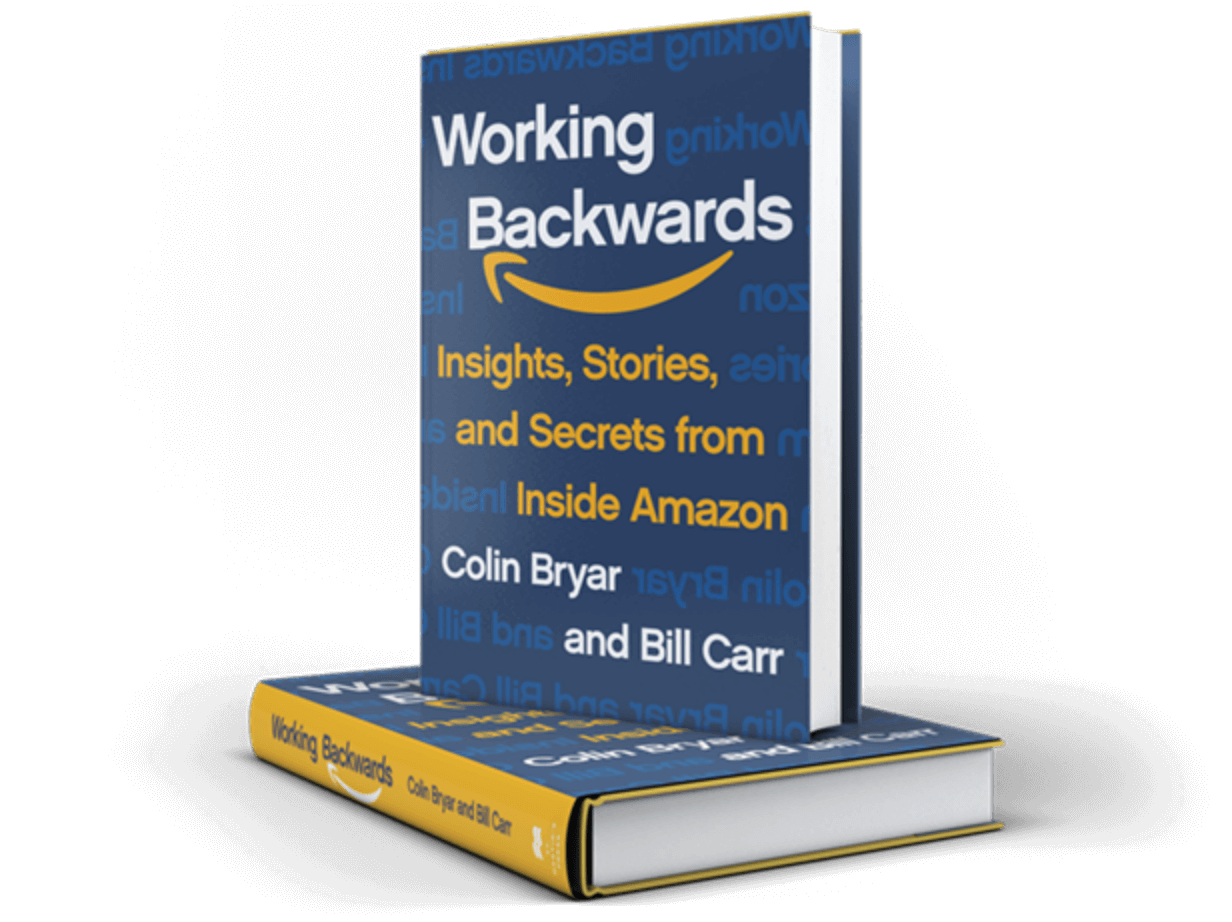
Writing a press release and FAQ first exposes the gaps between the customer, the problem, the limitations of existing alternatives, and the value of the proposal.
- Customer experience
- Press release
- FAQ
- Product and execution
Harvard Business Review's coverage of purposeful questioning likewise explains that questions go beyond gathering information to reveal a person's thinking and leadership. Questions that are strategic, clear, and well timed signal to the other person, 'This person knows what matters right now.' Unprepared questions, by contrast, can give the impression of passing on responsibility or missing the context.

What you ask, how clearly you ask it, and when you ask must work together for a question to move conversation and decision-making forward.
- Strategic intent
- Clarity
- Timing
IDEO and Stanford d.school emphasize problem framing and 'How Might We' questions for the same reason. The quality of an idea is strongly influenced by the scope and language used to define the problem, not simply by how quickly an answer is produced. Ultimately, a planner's way of speaking is not a sentence style. It is a sequence for looking at a problem.

A How Might We question creates an explorable scope by including the audience, desired change, and meaningful constraints without building in an answer.
- Audience
- Desired change
- Meaningful constraints
A Planner's Language Contains a Structure for Judgment
A good question is not just a request for more information. It is a way to make the next choice possible.
| What a Planner Says | What It Clarifies | What It Achieves |
|---|---|---|
| What needs to change as a result of this work? | Purpose | Focuses on change rather than deliverables |
| Whose choices are we trying to change, and which ones? | Audience and behavior | Turns a vague audience into a specific user |
| What has already been decided, and what is still open? | Conditions and constraints | Clarifies the scope of what can change |
| Where are things most seriously stuck right now? | Core problem | Finds the bottleneck rather than the symptoms |
| What criteria should guide our choice? | Decision criteria | Turns a debate about taste into a decision |
| What if we separate what to decide now from what to verify? | Next action | Connects the meeting to execution |
6 Steps of Questioning to Establish Context in a Meeting
Rather than asking every question at once, narrow the conversation in the order needed to make a decision.
-
01
Purpose
Ask about the outcome that needs to change, not just the deliverable.
'Let's build a website' and 'Let's increase our content' are still closer to means than ends. First establish what this work should change: customer understanding, choices, behavior, or the way the organization operates internally.
What to checkYou should be able to describe in one sentence the change that follows the deliverable, rather than the deliverable itself.
Common mistakeMistaking the requested format for the goal and immediately defining the production scope.
What this step taught meA clear purpose also reveals the work you do not need to do.
-
02
Audience
Ask about one person's situation, not everyone.
'We want lots of people to know about us' does not help you make a decision. Specify whom you want to reach, at what moment, what you want them to understand, and which choice you want to change.
What to checkYou should be able to describe the person's situation and current behavior, not just their job title.
Common mistakeDefining only demographic details such as age and gender while missing the actual context.
What this step taught meNarrowing the audience does not make the message exclusionary; it makes it more precise.
-
03
Context
Separate facts, interpretations, and requests.
The statement 'We're not getting a response' may combine actual figures, the reasons someone feels that way, and their preferred solution. Separate confirmed facts from assumptions that have not yet been tested.
What to checkYou should be able to write down what you know now separately from what you still need to verify.
Common mistakeAccepting the other person's interpretation as fact and solving the wrong problem.
What this step taught meThe first step in reading context is not adding words, but separating what has been mixed together.
-
04
Problem
Find the biggest bottleneck rather than the symptom.
Even if there seems to be too little content, the real problem may lie in understanding, trust, or conversion rather than attracting visitors. Among the various symptoms, choose the one point with the greatest effect on the outcome.
What to checkYou should be able to explain which metric or behavior would change if this problem were solved.
Common mistakeDefining the most visible symptom as the core problem and merely increasing activity.
What this step taught mePlanning is closer to the skill of removing work that does not address the problem than the skill of adding more tasks.
-
05
Criteria
Agree on criteria for choosing, rather than relying on taste.
Words such as good, sophisticated, and impactful mean different things to different people. Decide what to prioritize, such as readability, trust, differentiation, conversion, or operational efficiency, and agree on the criteria to use when those priorities conflict.
What to checkYou should be able to use the same criteria when choosing between two alternatives.
Common mistakeProducing many design options without decision criteria and averaging out everyone's tastes.
What this step taught meGood criteria do not restrict ideas; they speed up decisions.
-
06
Next Move
Summarize the meeting and distinguish the next actions.
At the end of the conversation, briefly state what was decided, what needs verification, who is responsible, and when. Restate the agreed problem and criteria in one sentence to reduce differences in interpretation.
What to checkAfter the meeting, everyone should be able to explain the same problem and the immediate next action.
Common mistakeHaving a rich discussion that leaves no decisions or responsibilities behind.
What this step taught meA planner's final sentence is not a summary that closes the conversation, but a sentence that opens the way to execution.
How Scattered Remarks Become an Actionable Plan
The key is not the amount of talk, but a sequence that makes judgment possible.
- 01PurposeWhat needs to change?
- 02AudienceWhose choice, and which one?
- 03ContextSeparate facts from assumptions
- 04ProblemThe biggest bottleneck
- 05CriteriaWhat should come first?
- 06ActionWho does what, and when?
4 Signals You Hear in Conversations with Good Planners
Look at where the questions take the conversation, rather than how many questions are asked.
They redefine a request rather than accepting it as given.
They do not leave 'Please make it feel more current' as a request for a style change. They ask what feels dated and whose choices it is obstructing.
What to aim forRestate the problem to solve in one sentence, rather than the thing to make
They do not mix facts with interpretations.
They distinguish confirmed data, observed phenomena, untested assumptions, and desired solutions.
What to aim forKeep separate notes for 'confirmed' and 'to be verified'
They do not say everything is important.
Rather than incorporating more demands, good planners choose what to solve first and what to leave outside the current scope.
What to aim forAsk what can be given up in order to gain one thing
They turn a long conversation into a short statement.
They do not simply shorten what the other person said. They summarize the purpose, problem, and criteria in one sentence while preserving the important relationships.
What to aim forConfirm agreement by saying, 'The core issue, as I understand it, is...'
Korean Practical Guides for Practicing the Structure of Planning and Communication
These books by Korean authors help translate international strategy frameworks into the language of everyday life, meetings, reporting, and persuasion.

Gihoekja-ui Seupgwan · Choi Jang-soon
Explores the habits that turn everyday input from observation, conversation, reading, and writing into your own questions and perspectives.
What to aim forBefore a meeting, note observed facts and Why questions rather than answers
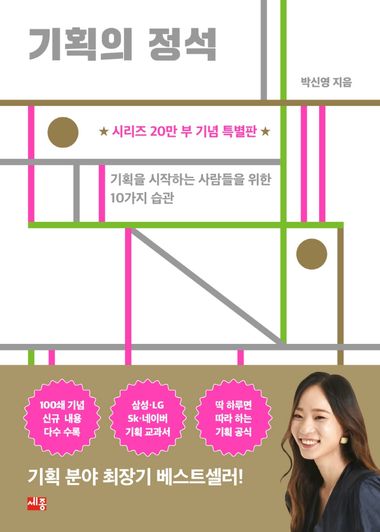
Gihoek-ui Jeongseok · Park Shin-young
Explains how to turn vague requests into clearly defined problems and execution plans through Focus, Why, Definition, Dividing, Concept, and Action Plan.
What to aim forDefine the problem in one sentence, then break it down and connect it to an action plan

Il Jalhaneun Sarameun Dansunhage Malhamnida · Park So-yeon
Focuses less on speaking briefly than on communicating through a precise structure that enables others to understand, judge, and act.
What to aim forDistinguish the conclusion, reasons, and required actions when speaking in reports and meetings

Il Jalhaneun Sarameun Dansunhage Hamnida · Park So-yeon
Sets out practical principles for reducing complexity in planning, writing, speaking, and relationships so you can focus on the results that matter.
What to aim forPut what to do, what not to do, and the decision criteria on one page
“Planning ability is not the speed of producing answers, but the power to turn scattered remarks into a coherent context in which decisions can be made.”
Park Siha · SIHA
Putting it into practice
- 01Before a meeting, write one sentence answering, 'What needs to change as a result of this work?'
- 02Take notes on what the other person says in four separate sections: facts, interpretations, requests, and constraints.
- 03Before proposing a solution, ask about the audience, situation, and biggest bottleneck.
- 04When comparing alternatives, agree on three decision criteria and their order of priority rather than relying on taste.
- 05At the end of the meeting, summarize aloud what was decided, what needs verification, who is responsible, and the next scheduled step.
7 Questions to Check Whether Your Conversation Has a Planning Structure
If you can answer most of these questions, your meeting is moving beyond a discussion of deliverables toward an actionable plan.
Did I state the outcome that needs to change through this work?
Did I define whose situation and choices we are addressing?
Did I separate confirmed facts from assumptions still to be tested?
Did I choose the single biggest bottleneck among the various symptoms?
Did I confirm the conditions already decided and the scope of what can change?
Did we agree on decision criteria and priorities for choosing among alternatives?
Did I summarize decisions, verification tasks, owners, and next actions?
Further thoughts
People who plan well do not always speak in polished or assertive ways. Instead, they avoid rushing to an answer, check assumptions the other person has overlooked, and turn complicated remarks into simpler choices. Even with few words, they can ask questions that hold on to purpose and criteria. Even amid many opinions, they can distinguish what is needed for a decision from what is not.
That is why saying 'you can hear it in how someone speaks' is not about a voice or a style of expression. It is about what they ask first, which words they distinguish, and where they bring the conversation to a close. Planning ability is proven in the finished work, but the sequence of thinking that creates that work appears first in conversation.
Experience adds depth and patterns to those questions. Years alone, however, are not enough. Only when we go beyond repeating experience and reflect each time on what we observed and which criteria guided our choices does experience turn into planning ability.
Sources and further reading
-
BookGood Strategy/Bad Strategy · Richard Rumelt
Describes good strategy as a concrete, coherent response to obstacles.
Read the source -
FrameworkThe Pyramid Principle & SCQ · Barbara Minto
A method for structuring thought under one central message and establishing the reader's context through situation, complication, and a central question.
Read the source -
BookPlaying to Win · A.G. Lafley & Roger Martin
Describes strategy as a system of connected choices about where to play and how to win.
Read the source -
Company PracticeWorking Backwards and PR/FAQ · Amazon
An approach that defines the customer experience and the questions customers will ask before defining product features.
Read the source -
ResearchThe Surprising Power of Questions · Harvard Business Review
Explores how questions change learning, ideas, relationships, and performance.
Read the source -
InterviewAsking Purposeful Questions · Harvard Business Review
Explains why the content and timing of questions reveal thinking, insight, and leadership.
Read the source -
Design MethodHow Might We Questions · Stanford d.school
A practical tool for turning problems into explorable questions that are neither too broad nor too narrow.
Read the source