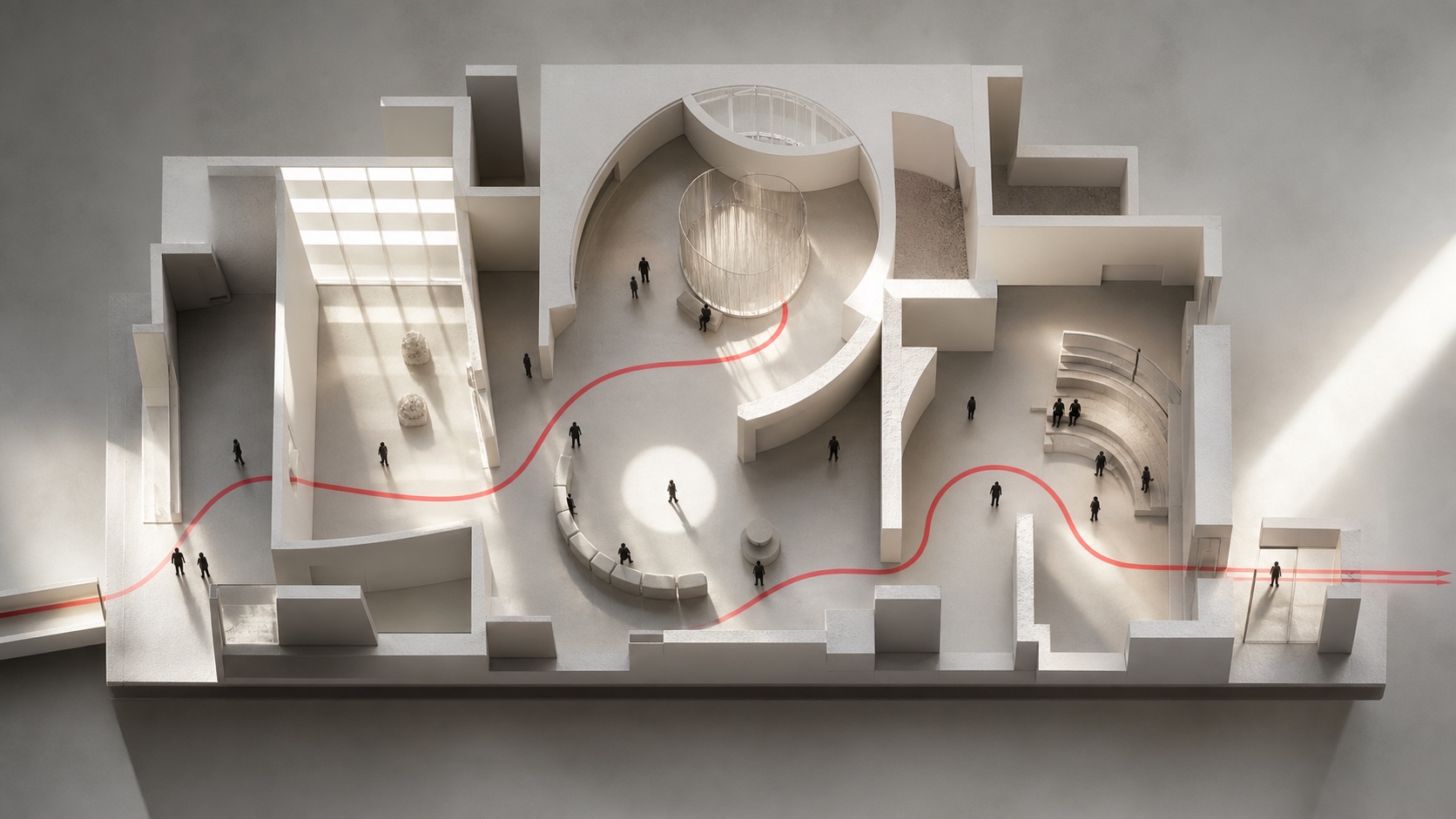
When spaces look equally attractive in photographs, why do some make us stay longer, talk more, and return?
It started with hands-on experience.
When I observe cafes, exhibitions, brand stores, and pop-ups, I look first at people's behavior rather than the decor. Do they hesitate at the entrance or walk in naturally? Where do they stop, and what do they touch? When do they talk to staff, and which scenes do they photograph? These observations reveal the gap between a space's intended message and the actual experience.
Even a visually accomplished space can shorten a customer's stay if it is unclear what they should do or if the routes for shopping and trying things out conflict. By contrast, even a small, understated space can help visitors understand the brand naturally when the sequence from entry to exit is clear and its materials, language, service, and content express the same attitude.
When planning events, pop-ups, and flea markets, I have also found it more effective to map out the expectations visitors bring, what they will discover, what they will do, and what they will remember as they leave, rather than deciding on a photo spot first. A space is not a backdrop. It is a medium for designing the actions that take place between a brand and its customers.

Key perspective
Spatial branding is not about applying a logo and brand colors to an interior. It is the process of translating a brand's promised value into circulation, sensory experience, information, service, and operations. Visitors do not read strategy documents, but they judge a brand's attitude through the way a door opens, the tone of instructions, the waiting time, and staff behavior.
A good space has a hierarchy of moments. Rather than making every area visually intense, it should connect the scene that first builds anticipation, the one that encourages people to stay, the one that helps them choose, and the one that leaves a final memory. With this flow in place, even moments designed for photographs can lead to content and purchases without interrupting the actual experience of using the space.
A space is also not a finished result that stays fixed after construction, but an operating system that needs continual observation and adjustment. Intended routes may differ from actual movement, and a popular scene may get in the way of purchases. When people's behavior is recorded and staff experience is considered alongside customer feedback, a space becomes a more accurate expression of the brand over time.
Five Moments of Customer Behavior for Reading a Space
Before assessing a space's aesthetics, examine what customers feel and do in each moment.
| Moment | Customer's Question | What to Design |
|---|---|---|
| Entering | Is this a place for me? | First impression, entrance, welcome, anticipation |
| Exploring | Where should I go, and what should I look at? | Circulation, information, sequence of discovery |
| Staying | Why should I stay longer? | Sensory experience, comfort, content, participation |
| Converting | What should I choose and do? | Experiences, consultations, purchases, reservations |
| Leaving | What will I remember and talk about? | Final scene, sharing, return visits |
Nine Steps to Design a Space as a Brand Experience
This sequence goes beyond creating a beautiful image to connect customer behavior, operations, and business goals into a single flow.
-
01
Outcome
Define the actions and outcomes you want the space to generate.
Decide which comes first: awareness, time spent, hands-on experience, purchases, consultations, community, or content creation. If there are multiple goals, prioritize them according to the visitor's stage and establish observable indicators for assessing the space's performance.
What this step taught meWhen a space's purpose is unclear, it may contain more impressive scenes while leaving visitors less certain about what to do.
-
02
Audience
Define visitors' expectations and hesitations in specific terms.
Write down who will visit, what information and emotions they will bring, and what they may anticipate or find uncomfortable before entering. Consider the differences between first-time and familiar visitors, as well as those arriving alone and in groups.
What this step taught meA good spatial experience begins where the customer feels comfortable taking the first step, not with what the brand wants to show.
-
03
First Scene
Design a scene visitors can understand within the first 10 seconds.
Check how the interior appears from outside, whether the entrance and guidance are clear, and where the eye goes first. Make the brand's identity and the actions available in the space intuitively understandable within a single scene.
What this step taught meThe first scene is not the most spectacular one. It is the one that lets visitors choose their next action without hesitation.
-
04
Journey
Map the customer journey from entry to exit.
Mark the key actions and emotions in the sequence of entering, exploring, staying, trying things out, purchasing, and leaving. Identify where routes overlap, where explanation is needed, and where waiting or congestion occurs, then distinguish what should be addressed through spatial design and what through operations.
What this step taught meA floor plan shows a space's structure, but a customer journey shows the experience that actually takes place within it.
-
05
Sensory Language
Translate the brand's attitude into sensory language.
Define the emotions that color, light, materials, sound, scent, temperature, furniture, and staff tone of voice should create. Rather than choosing each sensory element separately, check that the brand's core principles convey the same meaning through every choice.
What this step taught meSensory consistency is not about giving everything the same tone. It is about expressing one attitude through multiple senses.
-
06
Participation
Turn observers into participants.
Design actions that help visitors actively understand the brand, such as touching, comparing, asking questions, making, documenting, and sharing. Participation should not end as a decorative event; it should let people experience the core value of the product and brand.
What this step taught mePeople remember experiences in which they made choices and acted for themselves longer than explanations they were given.
-
07
Conversion
Let experience lead naturally to purchase.
Provide prices, product differences, consultation guidance, and ways to purchase at the moment they are needed. Check that photo spots and popular content do not obstruct product exploration or checkout, and connect staff guidance and digital screens to the same flow.
What this step taught meGood conversion is not a scene that pressures people to buy. It is one that makes the next action easy for a customer who understands enough to choose.
-
08
Field Test
Observe actual behavior and revise operating rules.
After opening, observe movement routes, dwell time, questions, congestion, photography, purchases, and departure points. Record feedback from customers and operators together, and keep making small improvements to furniture, guidance, content, and staffing.
What this step taught meA space's quality is not determined on opening day. It improves through operations that learn from actual behavior.
-
09
After Visit
Design a final touchpoint that carries the experience beyond the space.
Decide what to hand visitors just before they leave, what words to close with, and where they can find information again and continue the relationship after their visit. Receipts, packaging, follow-up messages, content worth saving, and reasons to return should recall the core experience felt in the space. Rather than simply asking visitors to share, give them cues that help them describe the experience in their own words.
What this step taught meA space's influence does not end when someone walks out the door. It expands when the experience leads to memory, sharing, and return visits.
How a Spatial Experience Leads to Memory and Return Visits
Each scene should naturally open the way to the next action.
- 01AnticipationExternal information, first impression
- 02EnteringUnderstanding, reassurance, welcome
- 03ExploringDiscovery, staying, participation
- 04ConvertingExperiences, consultations, purchases
- 05MemorySharing, recommendations, return visits
“A good space is not a beautiful backdrop. It lets people understand a brand's attitude through action.”
Park Siha · SIHA
Putting it into practice
- 01Define the single most important customer action and business outcome you want the space to generate.
- 02Write down at least three questions or hesitations a first-time visitor might have before entering.
- 03Walk through the five moments of entering, exploring, staying, converting, and leaving, documenting each with photographs and notes.
- 04For each moment, write one line each on what customers need to know, how they should feel, and what they should do.
- 05Check whether light, sound, scent, materials, and customer interactions express the same brand attitude.
- 06Design at least one participatory action that allows visitors to touch, compare, and document things themselves.
- 07Check that photo spots and experiential content do not obstruct movement, product exploration, or purchasing.
- 08Record customer behavior and operational problems during the first week after opening, and decide what to fix immediately.
Further thoughts
The first key point is to view a space as a sequence unfolding over time, not as an image. Visitors do not experience the entire space at once as they would a single photograph. They begin at the entrance and encounter scenes in sequence, so we need to check whether the information and emotions at each moment open the way to the next action.
The second key point is not to separate brand strategy from operations. A pleasant scent and good music cannot compensate for long waits or unhelpful guidance. A space's promise must carry through into actual operations, including staff training, inventory and payment, cleaning, safety, and problem resolution.
The third key point is the balance between being photogenic and being usable. Scenes people want to share encourage organic reach, but they must not obstruct basic actions such as sitting comfortably, understanding products, and making a purchase. We need to assess both how finished a space looks in photographs and how comfortable it feels in person.
A space is content a brand creates through people's bodies and time. When we design not only what visitors will see, but also where they will pause, whom they will talk to, and what choices they will make, a visit can lead to memory, relationships, and business.